

Walls and brickwork
London stock brick lasts centuries if the mortar is looked after. Most brickwork problems start in the joints.
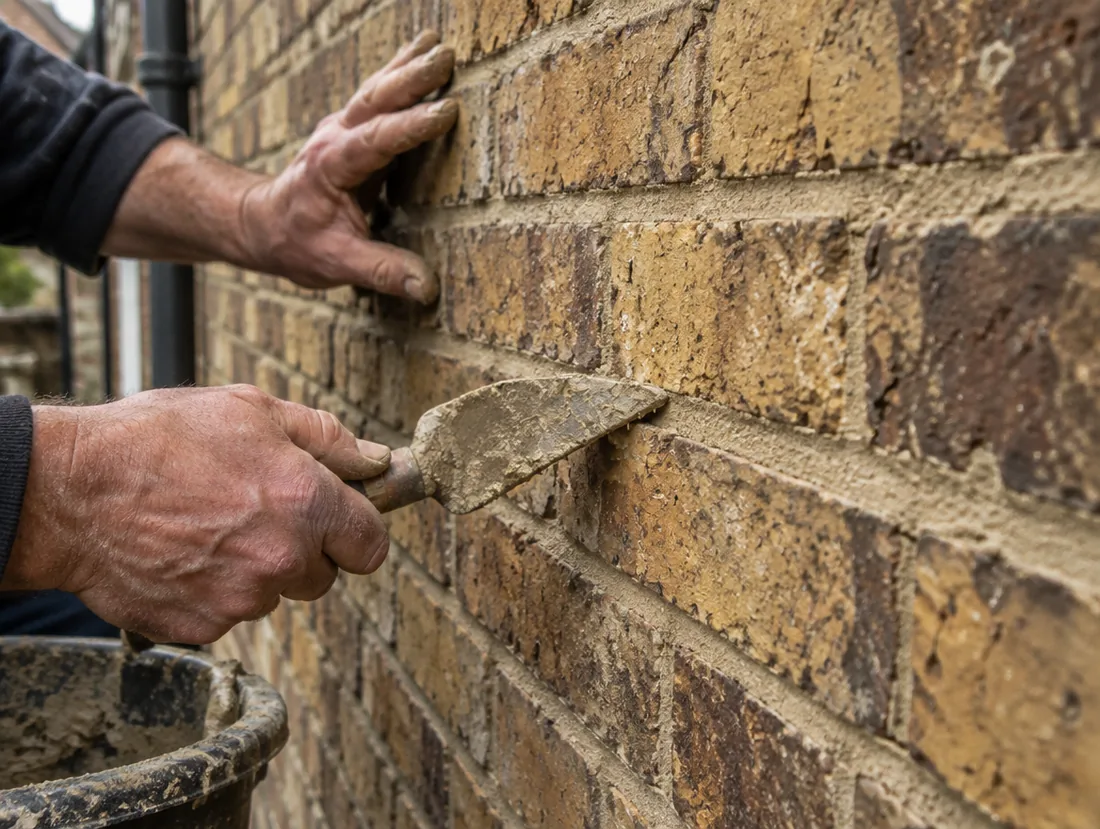
Repointing
Victorian and Georgian London brick was laid in soft lime mortar, softer than the brick, so moisture escapes through the joints. Repoint it in hard cement and water is forced out through the brick face instead, which then starts to crumble.
Good repointing means raking the joints out to a proper depth and matching the mix, the colour and the joint profile to what's already there.
Cracks and movement
Hairline cracks in the mortar are often cosmetic. Stepped cracks that follow the joints, or cracks wider at one end, can mean movement and are worth having looked at.
Garden and retaining walls
Retaining walls need proper foundations and drainage behind them, because water pressure is what pushes them over. A good coping on top stops a wall soaking up rain.
Get a price.
About a minute. Then we ring you to arrange a time to look at the roof.
- Tell us about the roofA few quick questions, about a minute.
- We call youTo arrange a time that suits you.
- Free inspectionWe look at the roof and talk you through it.
- A clear priceNo obligation to go ahead.
Common questions.
How do I know if my house needs repointing?
Try raking a joint with a key. If the mortar comes away as powder, or sits well back from the brick face, it's due. Damp patches inside on exposed walls are another sign.
Why does lime mortar matter on an old house?
Because it's softer than the brick. Lime lets moisture escape through the joint, which is the cheap part to replace. Hard cement pushes that moisture through the brick instead.